


Thermal Oil Boiler - Superheated Oil Boiler
A thermal oil boiler, also called a thermal oil heater, hot oil boiler or thermal fluid heater, heats a heat transfer oil and circulates it in a closed loop to deliver high-temperature process heat at low operating pressure. Because the oil stays in the liquid phase, the system does not need steam traps, condensate return or boiler feedwater treatment.
Ekotek manufactures thermal oil boilers from 93 to 34,900 kW in electric, liquid/gas-fired and solid fuel versions: the Electro, Albatros, Phoenix and Dragon series. Each system is engineered around the plant's heat load, fuel and required process temperature.
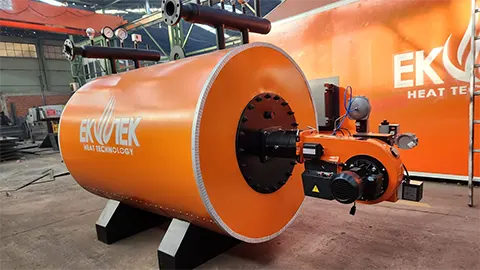

Thermal Oil Boiler Models
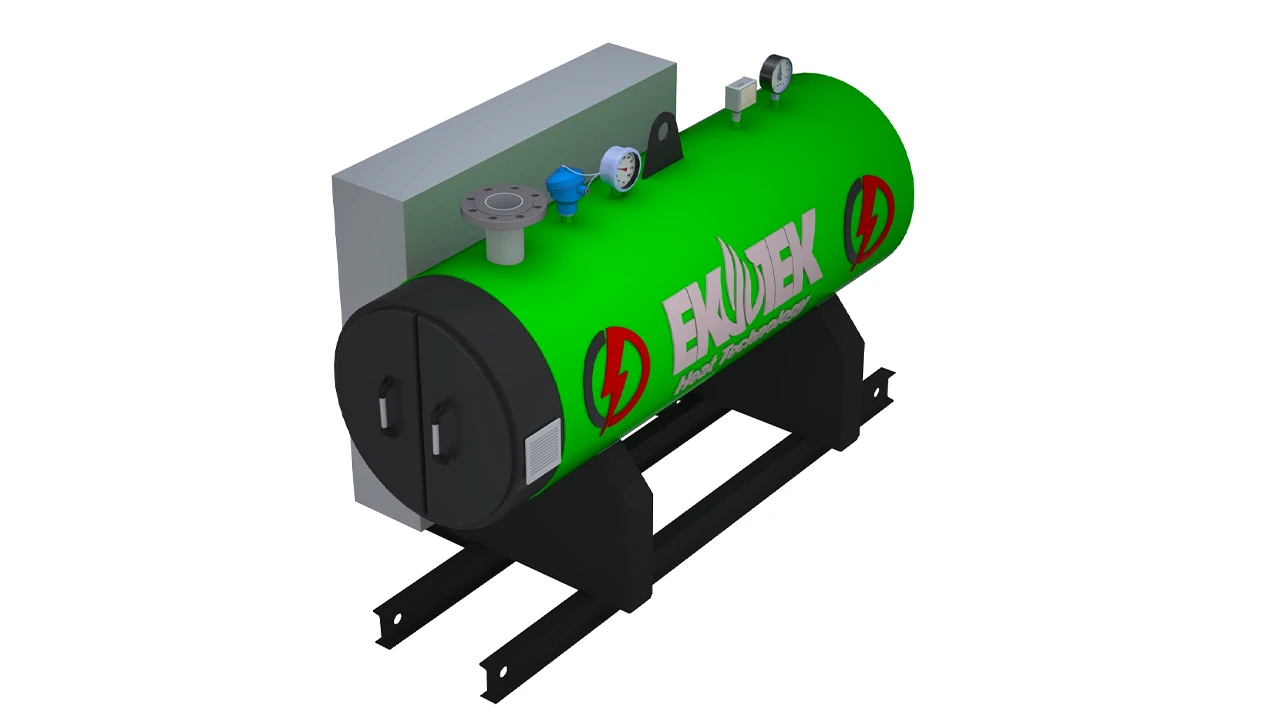
Electro Series - Electric Thermal Oil Boiler
More details ›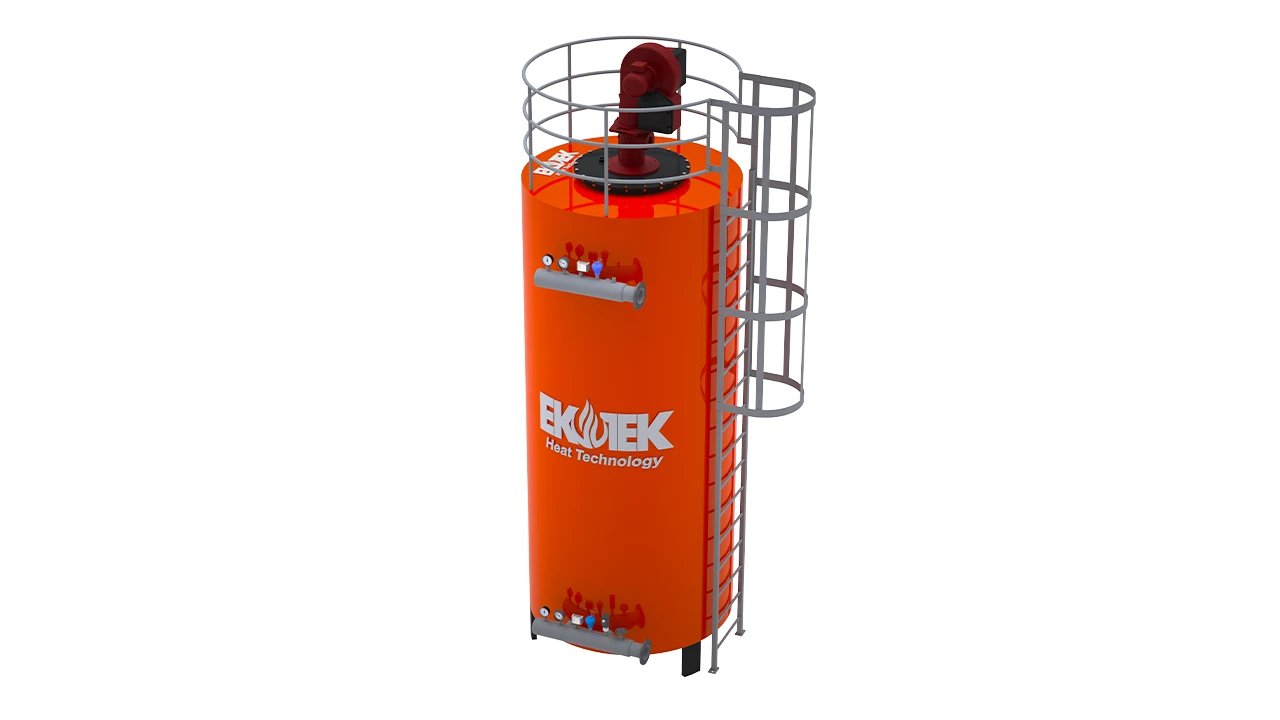
Albatros Series - Liquid Gas Fired Thermal Oil Heater
- 116 kW - 34.900 kW heat generation capacity
- Vertical, 3-pass, Coil-type, EN 10216-2 standard P235 GH seamless steel pipes
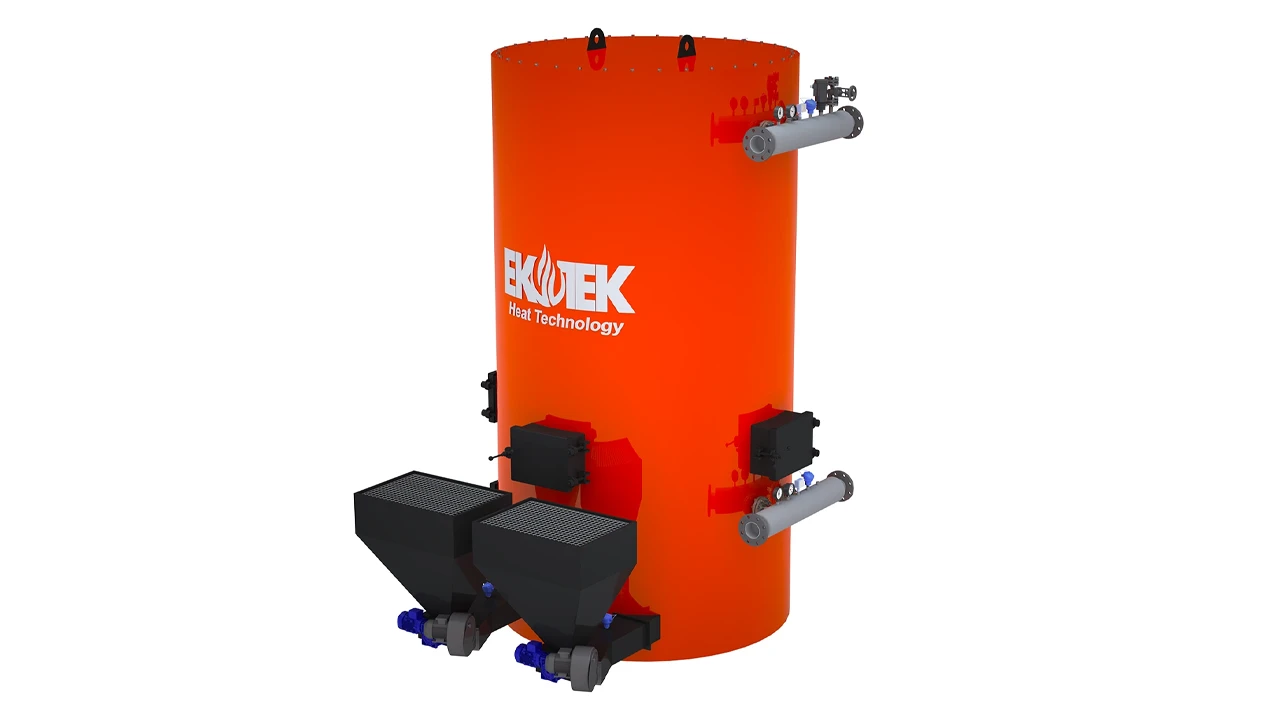
Dragon Series - Solid Fuel Thermal Oil Boiler
- 93 kW - 17.450 kW heat capacity
- Bottom-fed, mechanically augered - Rotary grate and moving piston grate according to capacity
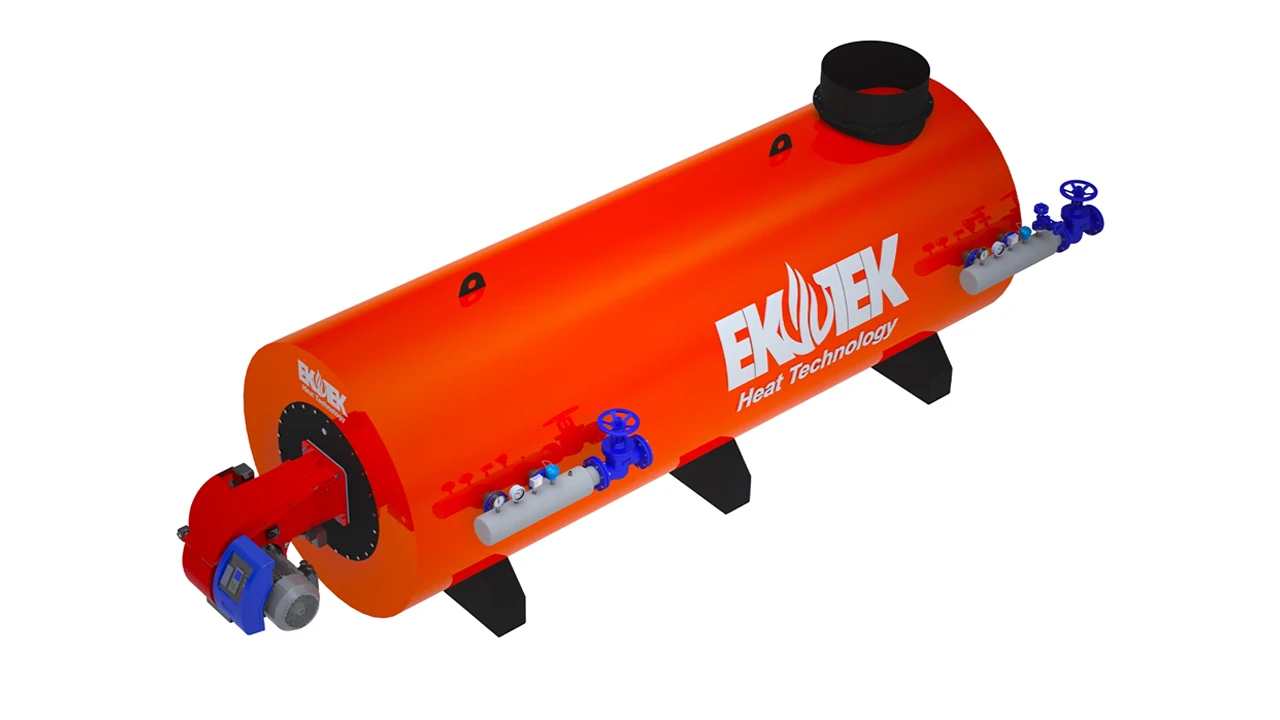
Phoenix Series - Liquid Gas Fired Thermal Oil Boiler
- 116 kW - 34.900 kW heat generation capacity
- Horizontal, 3-pass, Coil-type, EN 10216-2 standard P235 GH seamless steel pipes
What Is a Thermal Oil Boiler?
A thermal oil boiler is an indirect heating system. A burner, a solid fuel furnace or electric heating elements heat a thermal fluid (mineral or synthetic heat transfer oil) inside a coil. A circulation pump sends the hot oil to heat consumers such as reactors, presses, dryers, tanks and heat exchangers, and the cooled oil returns to the boiler to be heated again.
The names thermal oil boiler, thermal oil heater, hot oil boiler, hot oil heater and thermal fluid heater all describe the same type of equipment. Strictly speaking, the oil is not boiled; "boiler" is the established industry term, while "heater" is more common in Europe and North America.
How Does a Thermal Oil Boiler Work?
- Heating: The burner flame, furnace gases or electric elements transfer heat to the oil flowing through the boiler coil.
- Circulation: A circulation pump keeps the oil moving at a controlled flow rate. Constant flow protects the oil from local overheating.
- Heat transfer: The hot oil passes through the heat consumers and releases its heat to the process.
- Return: The cooled oil returns to the boiler. An expansion tank absorbs the change in oil volume as the temperature rises and falls.
- Control: The supply and return oil temperatures and the flue gas temperature are monitored continuously. With Ekotek's PLC control panel, operators can follow temperatures, alarms and programs on a single screen.
Thermal Oil Boiler vs Steam Boiler
Both systems deliver process heat, but they work in different ways. A steam boiler uses the latent heat of steam, so higher temperatures require higher pressures. A thermal oil boiler reaches high process temperatures while the circuit stays at low pressure.
| Criteria | Thermal oil boiler | Steam boiler |
|---|---|---|
| Heat transfer medium | Heat transfer oil (liquid phase) | Water and steam (phase change) |
| Operating pressure | Low; does not rise with temperature | Rises with steam temperature |
| Water treatment | Not required for the oil circuit | Required (softening, deaeration, blowdown) |
| Corrosion and scale | No scale; minimal internal corrosion | Risk of scale and corrosion if water quality is poor |
| Steam traps and condensate | Not needed | Needed |
| Temperature control | Precise and stable | Depends on pressure control |
| Typical use | High-temperature indirect heating | Processes that need steam directly (sterilizing, humidifying, cooking) |
If the process needs steam itself, a steam boiler is the right choice. If it needs high, stable temperatures at low pressure, a thermal oil boiler is usually more practical. A thermal oil system can also supply a secondary heat exchanger to produce steam or hot water.
Thermal Oil Boiler Types by Fuel
Electric Thermal Oil Boilers
The Electro Series covers 120 to 30,000 kW. Electric models produce no flue gas on site, need no chimney or fuel storage and offer stepwise power control. They suit plants with sufficient electrical capacity or emission limits. See all electric thermal oil boilers.
Liquid and Gas-Fired Thermal Oil Boilers
The Albatros Series and the Phoenix Series each cover 116 to 34,900 kW and run on natural gas, LPG or liquid fuels with a suitable burner. See all liquid and gas-fired thermal oil boilers.
Solid Fuel Thermal Oil Boilers
The Dragon Series covers 93 to 17,450 kW for plants that use solid fuels such as wood chips or other biomass. See all solid fuel thermal oil boilers.
Hybrid Thermal Oil Boilers
The Phoenix ECO Series is a hybrid thermal oil boiler for plants that want to combine energy sources. Capacity is selected per project; see hybrid boilers for details.
For temporary or relocatable heat, see mobile thermal oil boiler systems. For ships and offshore use, see the marine type thermal oil heater.
Open vs Closed (Nitrogen-Blanketed) Thermal Oil Systems
In an open system, the expansion tank is vented to the atmosphere. The design is simple, but the hot oil surface is in contact with air, so the oil oxidizes faster and its service life shortens.
In a closed, nitrogen-blanketed system, the space above the oil in the expansion tank is filled with nitrogen. This keeps oxygen and moisture away from the oil, slows oxidation and sludge formation and extends oil life. It is the preferred choice for higher process temperatures and continuous operation. Ekotek can design the system in either configuration, depending on the process and operating conditions.
Choosing the Thermal Fluid and Extending Oil Life
The heat transfer oil is selected according to the required process temperature, the lowest ambient temperature at start-up and the system design. Mineral oils are common for moderate temperatures; synthetic oils are used where higher thermal stability is needed. The oil supplier's maximum bulk and film temperature limits must not be exceeded.
Oil life depends mainly on operating temperature, oxygen contact and flow conditions. To keep the oil in good condition:
- Keep the oil flow through the boiler at the design rate; low flow overheats the oil film.
- Use a nitrogen blanket or keep the expansion tank oil cool to limit oxidation.
- Have an oil sample analyzed regularly (viscosity, acidity, flash point, carbon residue).
- Remove moisture and air carefully during the first start-up.
- Do not mix different oil types without the supplier's approval.
How to Size a Thermal Oil Boiler
Correct sizing starts with the process, not with a catalogue capacity. The main inputs are:
- Total heat load (kW): The sum of all heat consumers, plus pipe losses and a margin for future expansion.
- Supply and return temperatures: The temperature difference determines the required oil flow and pump size.
- Load profile: Continuous, batch or peak loads affect boiler capacity and control strategy.
- Fuel or energy source: Electricity, natural gas, liquid fuel or solid fuel availability and cost.
- Site conditions: Available space, chimney, electrical supply and local regulations.
Industries and Applications
- Chemicals and petrochemicals: Reactor heating, distillation and heating of storage tanks.
- Food processing: Industrial fryers, ovens, cooking kettles and oil processing.
- Wood and furniture: Hot presses for MDF, plywood and laminate production.
- Plastics and rubber: Mold heating, extrusion, calenders and vulcanization.
- Textiles: Stenters, dryers and dyeing machines.
- Asphalt and bitumen: Heating of bitumen tanks, pipelines and asphalt plants.
- Paint, coating and paper: Drying, curing and coating lines.
Auxiliary Equipment for Thermal Oil Systems
A thermal oil boiler works together with a set of auxiliary equipment. A typical system includes a circulation pump, expansion tank, oil storage (drain) tank, deaerator, filter, valves suited to thermal oil, temperature and pressure instruments and a control panel. Heat can be transferred to other media with a shell-and-tube thermal oil heat exchanger.
See thermal oil boiler room auxiliary equipment, thermal oil system equipment and industrial boiler accessories.
Safety and Maintenance
Thermal oil boilers operate at low pressure, but hot oil is flammable and must be handled with care. Safety devices typically include flow (differential pressure) protection, high-temperature limits for oil and flue gas, expansion tank level control and burner or heater interlocks.
Recommended routine checks:
- Daily: supply and return temperatures, pump pressure, expansion tank level and alarm records.
- Periodically: oil analysis, filter cleaning, burner adjustment and combustion analysis, and inspection of seals and insulation for leaks.
- Annually: inspection and cleaning of the heating surfaces and testing of all safety devices.
Operating and maintenance instructions are available in our user manuals. For service requests, visit the service page.
What Determines Thermal Oil Boiler Price?
There is no fixed price list, because each thermal oil boiler is configured for a specific plant. The main cost factors are:
- Capacity (kW): The largest single factor.
- Fuel type: Electric, liquid/gas-fired, solid fuel or hybrid designs differ in equipment and installation cost.
- System scope: Pumps, expansion and drain tanks, nitrogen blanketing, heat exchangers and piping.
- Automation: PLC control, remote monitoring and the level of safety equipment.
- Operating cost: Fuel or electricity price and boiler efficiency define the long-term cost more than the purchase price.
- Delivery and installation: Shipping, site installation and commissioning.
Request a Thermal Oil Boiler Quote
To receive a quote, share your total heat load or the list of heat consumers, the required process temperature, your fuel or energy source and the installation location. Our team will recommend a suitable model and system configuration. You can use the form on this page, contact us directly or schedule a consultation.
Frequently Asked Questions (FAQ) about Thermal Oil Boiler - Superheated Oil Boiler
What is a thermal oil boiler?
A thermal oil boiler heats a heat transfer oil and circulates it in a closed loop to supply high-temperature process heat at low pressure. It is also called a thermal oil heater, hot oil boiler or thermal fluid heater.
How does a thermal oil boiler work?
A burner, solid fuel furnace or electric elements heat oil flowing through a coil. A pump circulates the hot oil to the process, and the cooled oil returns to the boiler. An expansion tank absorbs the oil's volume change.
What is the difference between a thermal oil boiler and a steam boiler?
A steam boiler needs higher pressure to reach higher temperatures, while a thermal oil boiler reaches high temperatures at low pressure. Thermal oil systems need no water treatment, steam traps or condensate return.
Is a thermal oil heater the same as a thermal oil boiler?
Yes. Thermal oil heater, thermal oil boiler, hot oil boiler and thermal fluid heater are different names for the same closed-loop liquid-phase heating system.
Which fuels can a thermal oil boiler use?
Thermal oil boilers can run on electricity, natural gas, LPG, liquid fuels or solid fuels such as biomass. Hybrid models can combine energy sources.
What capacities do Ekotek thermal oil boilers have?
Ekotek thermal oil boilers range from 93 to 34,900 kW: Electro Series 120 to 30,000 kW, Albatros and Phoenix Series 116 to 34,900 kW, and Dragon Series 93 to 17,450 kW.
What is the difference between an open and a closed thermal oil system?
In an open system, the expansion tank is vented to the air, so the oil oxidizes faster. In a closed system, a nitrogen blanket keeps air and moisture away from the oil and extends its life.
How long does thermal oil last?
Oil life depends on operating temperature, oxygen contact and correct flow through the boiler. Regular oil analysis shows when the oil needs to be replaced; a nitrogen-blanketed closed system helps the oil last longer.
How do I size a thermal oil boiler?
Add up the heat demand of all consumers in kW, include pipe losses and a margin, and define the supply and return temperatures. These values set the boiler capacity, oil flow and pump size.
Which industries use thermal oil boilers?
They are used in chemicals, food processing, wood panel presses, plastics and rubber, textiles, asphalt and bitumen, paint, coating and paper production.
How much does a thermal oil boiler cost?
The price depends on capacity, fuel type, system scope, automation and installation. Ekotek prepares a project-specific quote based on your heat load and process temperature.
What maintenance does a thermal oil boiler need?
Check temperatures, pump pressure and expansion tank level daily; analyze the oil and clean filters periodically; and inspect heating surfaces and test safety devices every year.
Thermal Oil Boiler - Superheated Oil Boiler Get a Quote
Contact us for more details about the product, solutions and services.
- Share your full name, company, and contact details to receive a fast response for this product category.
- The category and page context are added to the message so your request reaches the relevant sales team.
- You can contact our team directly for product selection, technical details, quotation, and application scope.
Requests submitted from this category page Thermal Oil Boiler - Superheated Oil Boiler are delivered together with the page title.