


Hybrid Boilers
A hybrid boiler is an industrial boiler that runs primarily on liquid or gas fuel and uses electricity as a secondary, supporting energy source. The burner covers the main heat load; electric heaters step in for backup, load balancing, tariff optimization, or short interruptions so the plant keeps steam, hot water, superheated water, or thermal oil without changing the primary process medium.
Ekotek’s Hybrid ECO range covers four process media under one fuel strategy: the Storm ECO Series hybrid steam boiler (500–28,000 kg/h), the Burning ECO Series hybrid hot water boiler (116–50,000 kW), the Atlas ECO Series hybrid superheated water boiler (116–50,000 kW), and the Phoenix ECO Series hybrid thermal oil boiler (116–34,900 kW).
Primary fuels across the line include natural gas, LPG, LNG, propane, CNG, biogas, hydrogen, gas oil, diesel, fuel oil, and dual-fuel burner packages as specified. Electricity is planned as the secondary source—not a replacement for the liquid/gas burner on full load. Browse the models below, or contact us with your capacity, pressure or temperature, and fuel/power data for a sized proposal.


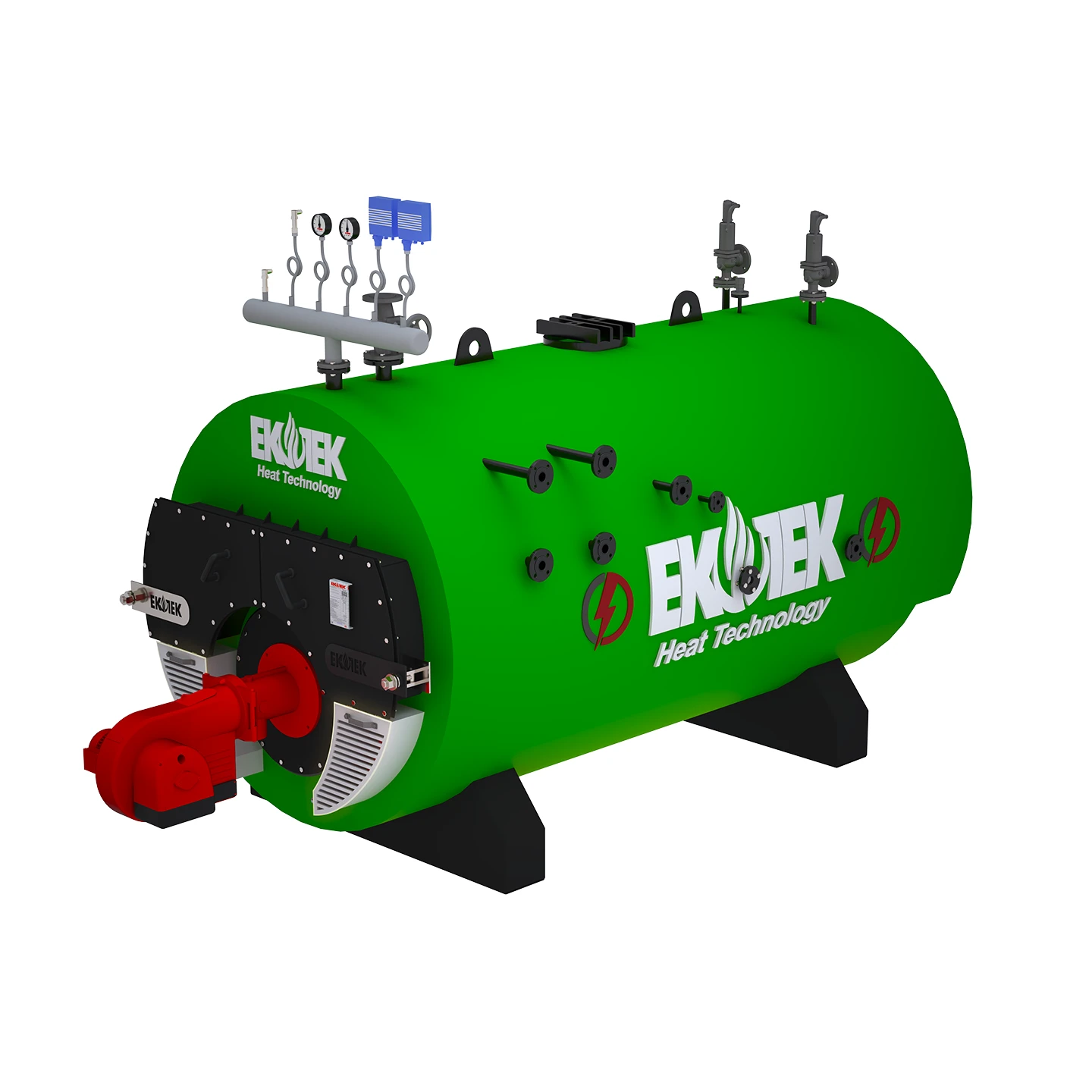
Storm ECO Series - Hybrid Steam Boiler
- Steam generation capacity from 500 kg/h to 28.000 kg/h
- 3-pass Scotch type
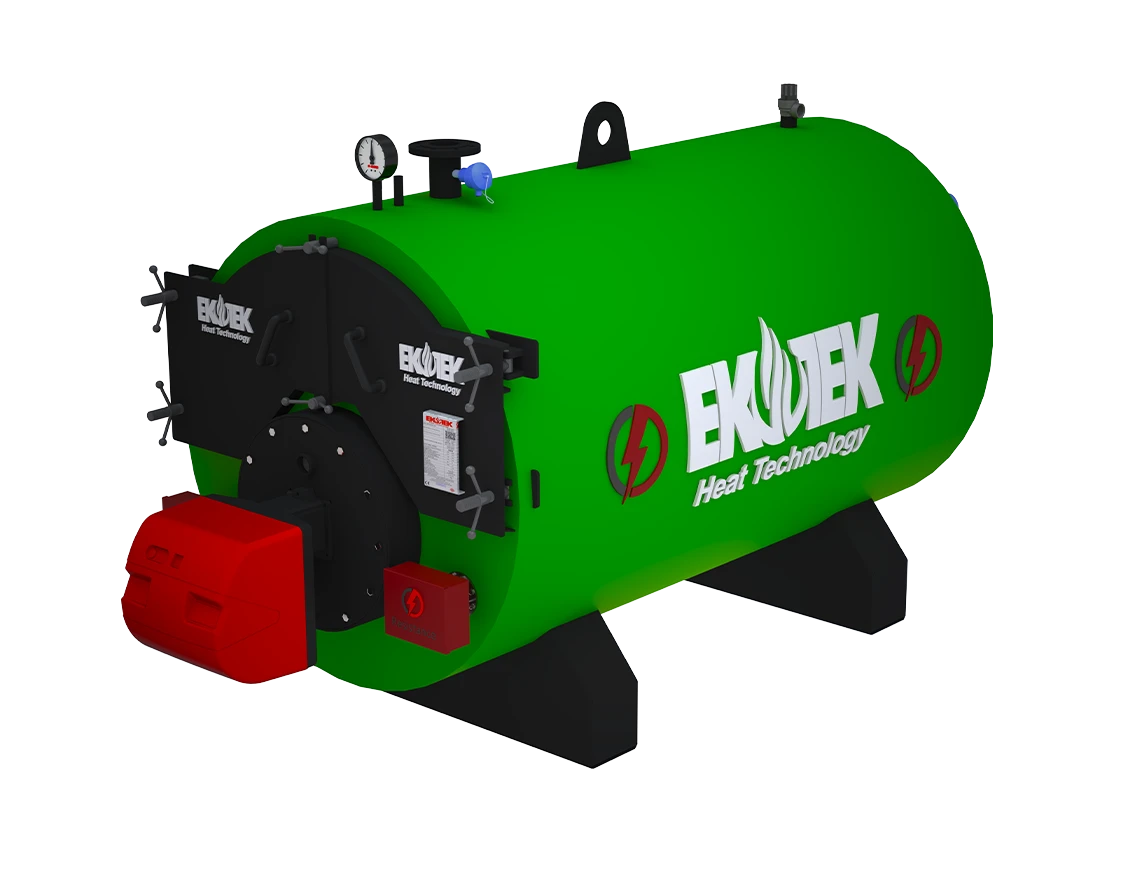
Burning ECO Series - Hybrid Hot Water Boiler
- 116 kW - 50.000 kW hot water production capacity
- Flame-Smoke Tube, Scotch Type, Wet Back, 3-Pass
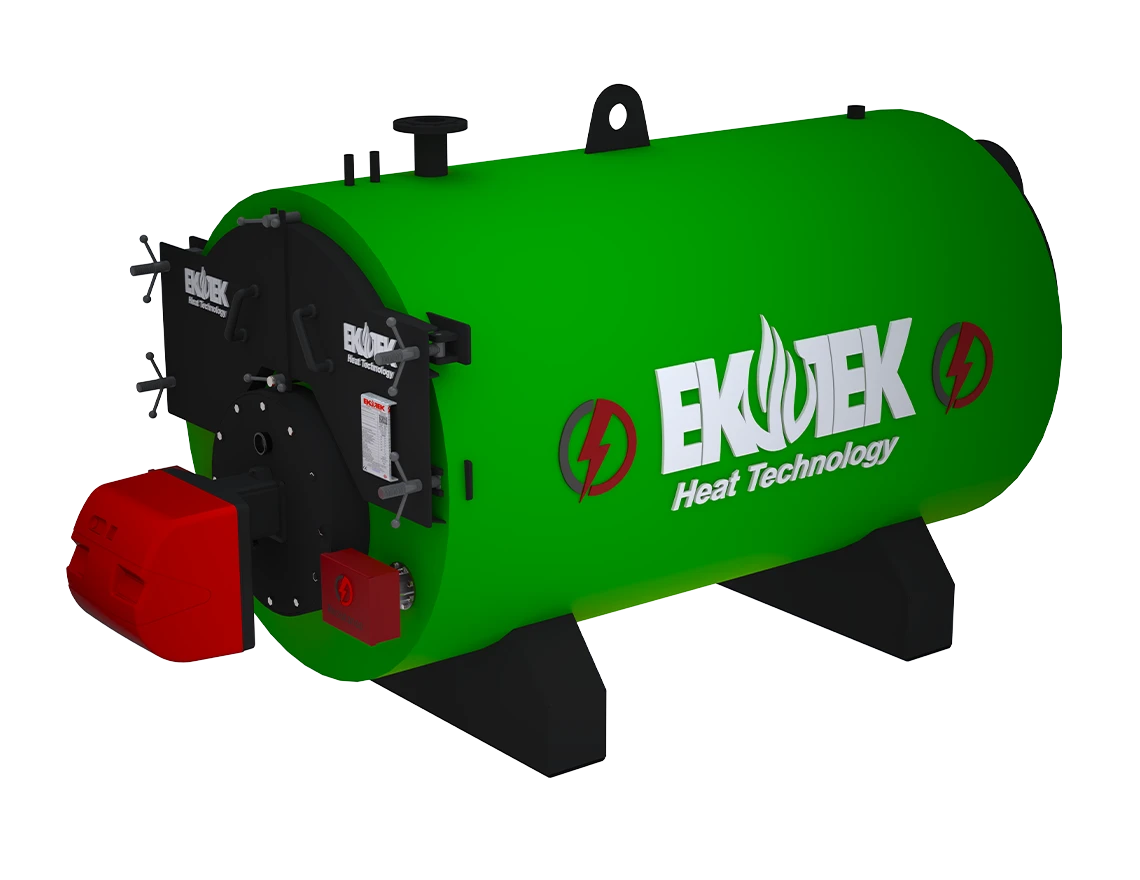
Atlas ECO Series - Hybrid Superheated Water Boiler
- 116 kW - 50.000 kW heat capacity
- Horizontal, 3-pass, Scotch type, wet back
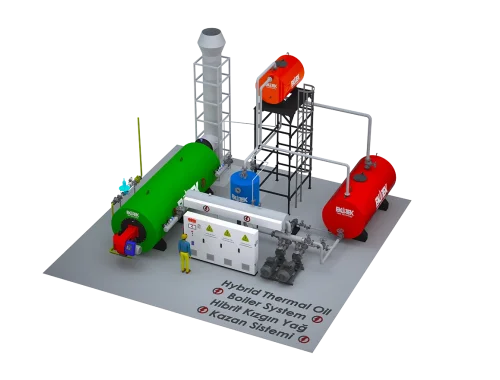
Phoenix ECO Series - Hybrid Thermal Oil Boiler
- 116 kW - 34.900 kW Heat Generation Capacity
What Is a Hybrid Boiler?
A hybrid boiler combines a liquid/gas-fired pressure vessel with electric heating elements in one package. The primary heat input comes from a burner; electricity supports, backs up, or balances the load when tariffs, fuel availability, or process demand make that useful. The process medium stays the same—steam, hot water, superheated water, or thermal oil—while the energy mix can change under control.
This differs from a pure electric boiler (no burner), a single-fuel liquid/gas boiler (no electric heaters), and from some “hybrid” designs elsewhere that mean solid-plus-oil firing. On this page, hybrid means Ekotek’s liquid/gas primary + electric secondary ECO series.
How Does a Hybrid Boiler Work?
- Start on liquid/gas: The burner fires first and brings the boiler to the set pressure or temperature for the process medium.
- Electric support: Resistance heaters engage automatically at low load, during tariff windows, or when the control strategy calls for backup or fine balancing.
- Mode switching: A PLC/SCADA-capable control panel selects burner, electric, or combined contribution within the unit’s design limits—without changing the steam, water, or oil circuit.
- Heat transfer: Scotch-type fire-tube wet-back three-pass shells (Storm, Burning, Atlas) or coil-type thermal oil heaters (Phoenix) transfer heat to the medium.
- Safety and distribution: Pressure, temperature, water/oil level, and burner/electric interlocks keep the unit within rated limits while steam or heat goes to the plant consumers.
Electricity remains a secondary, supporting source. Sizing still starts from the liquid/gas capacity needed for peak process demand; electric kW is then matched to backup and optimization goals.
Hybrid Boiler Series Comparison
Use the table to match medium, capacity, and operating band. Figures below are from each product’s technical specification range.
| Series | Medium | Capacity | Operating band | Pressure | Design |
|---|---|---|---|---|---|
| Storm ECO | Steam | 500–28,000 kg/h (349–19,535 kW) | Process steam | 3–16 bar | Scotch 3-pass wet back; liquid/gas primary + electric secondary; SCADA/PLC |
| Burning ECO | Hot water | 116–50,000 kW (electric secondary 70–5,814 kW) | 60–90 °C | 1–16 bar | Scotch 3-pass; liquid/gas primary + electric secondary |
| Atlas ECO | Superheated water | 116–50,000 kW | 60–130 °C (nitrogen suppression) | 3–16 bar | Scotch horizontal 3-pass wet back; liquid/gas primary + electric secondary |
| Phoenix ECO | Thermal oil | 116–34,900 kW | 60–450 °C (coil, EN 10216-2 P235GH); low-pressure heat transfer—body text also notes operation up to about 300 °C at atmospheric pressure depending on oil and layout | Low operating pressure vs steam/water systems | Coil-type hybrid thermal oil heater; liquid/gas primary + electric secondary |
Related single-energy pages: steam boilers, liquid–gas hot water boilers, electric hot water boilers, hybrid hot water boilers, superheated water boilers, and thermal oil boilers.
Storm ECO — Hybrid Steam Boiler
The Storm ECO Series is a Scotch-type, three-pass wet-back hybrid steam boiler for industrial process steam:
- Steam capacity: 500–28,000 kg/h
- Thermal capacity: 349–19,535 kW
- Working pressure: 3–16 bar
- Primary energy: liquid/gas fuels (natural gas, LPG, LNG, propane, CNG, biogas, hydrogen, gas oil, diesel, fuel oil, dual fuel as specified)
- Secondary energy: electricity
- Controls: SCADA/PLC-capable package as specified
For conventional steam lines without electric support, compare steam boilers and liquid/gas steam types such as natural gas steam boilers.
Burning ECO — Hybrid Hot Water Boiler
The Burning ECO Series supplies hybrid hot water for process and comfort heating:
- Heat capacity: 116–50,000 kW
- Electric secondary: 70–5,814 kW
- Water temperature: 60–90 °C
- Working pressure: 1–16 bar
- Design: Scotch-type, three-pass; liquid/gas primary + electric secondary
See also hybrid hot water boilers, liquid–gas fuel hot water boilers, and electric hot water boilers.
Atlas ECO — Hybrid Superheated Water Boiler
The Atlas ECO Series is a hybrid superheated water boiler for closed loops that need water above typical hot-water temperatures:
- Heat capacity: 116–50,000 kW
- Water temperature: 60–130 °C with nitrogen suppression
- Working pressure: 3–16 bar
- Design: Scotch horizontal, three-pass wet back; liquid/gas primary + electric secondary
Category overview: superheated water boilers.
Phoenix ECO — Hybrid Thermal Oil Boiler
The Phoenix ECO Series is a coil-type hybrid thermal oil (hot oil) heater:
- Heat capacity: 116–34,900 kW
- Operating temperature range (technical specs): 60–450 °C
- Coil material reference: EN 10216-2 P235GH
- Heat-transfer character: thermal oil systems operate at low pressure relative to high-temperature steam; product body text also describes operation up to about 300 °C at atmospheric pressure depending on oil and plant layout—confirm the exact temperature and pressure for your oil and process at quotation
- Energy: liquid/gas primary + electric secondary
Wider thermal oil range: thermal oil / superheated oil boilers, including liquid–gas and electric lines.
Fuels, Electricity, and Control
Primary liquid and gas options across the Hybrid ECO line include natural gas, LPG, LNG, propane, CNG, biogas, hydrogen, gas oil, diesel, fuel oil, and dual-fuel burner packages. Exact fuel list and burner model follow the series and project specification.
Electric heaters are sized as a secondary contribution (for example Burning ECO lists 70–5,814 kW electric secondary against 116–50,000 kW total). They do not replace a correctly sized liquid/gas burner for peak plant load. Control panels with PLC/SCADA options coordinate burner and electric modes; burner package details are covered under burners.
How to Choose a Hybrid Boiler
- Process medium: steam, hot water (60–90 °C), superheated water (up to 130 °C), or thermal oil
- Peak and average capacity (kg/h or kW)
- Working pressure (bar) or oil loop temperature (°C)
- Available primary fuels and dual-fuel needs
- Available electrical kW, voltage, and whether electric is for backup, tariff, or balancing
- Load profile: continuous, shift-based, or frequent turndown
- Boiler-room footprint, chimney, and switchboard limits
- Automation: local panel vs PLC/SCADA integration
Share these points when you contact us or schedule a consultation. We size vessel, burner, electric heaters, and auxiliaries together.
Industries and Applications
- Food and beverage: pasteurization, cooking, CIP heat, and related steam or hot water
- Chemical and petrochemical: reactor jackets, distillation heat, thermal oil loops
- Pharmaceutical: process steam, hot water, and oil heating where hybrid energy flexibility helps
- Plastics, rubber, paint, and coating: extrusion, mold heating, drying ovens
- Paper, wood, and textile: drying, pressing, finishing, and stenter heat
- Comfort and district heating: hotels, hospitals, campuses, and site heating networks via hot or superheated water
- Sites with variable energy costs: plants that want liquid/gas primary heat with electric support for tariffs or short fuel interruptions
Why Choose a Hybrid System?
- Primary capacity on proven liquid/gas firing for full process demand
- Electric secondary for backup, fine load control, and tariff-aware operation
- One vessel and one process circuit instead of two separate boiler rooms for the same medium
- Four media in one ECO family: steam, hot water, superheated water, thermal oil
- PLC/SCADA-ready control paths for plant integration (as specified per unit)
Hybrid is not automatically the right answer for every site. If you only need electric heat with no burner, start from the electric lines. If you never need electric support, a standard liquid/gas industrial boiler may be enough.
Related Solutions
- Steam boilers — Scotch, stoker, water-tube, and related steam types
- Hybrid hot water boilers — hot-water-focused hybrid path
- Superheated water boilers
- Thermal oil boilers
- Steam generators — compact electric and liquid/gas generators when a generator footprint fits better
- Industrial boilers — full product family
Request a Quote for an Ekotek Hybrid Boiler
Ekotek Heat Technologies manufactures industrial boilers in Aydın, Turkey. Tell us your medium (steam, hot water, superheated water, or thermal oil), capacity, pressure or temperature, primary fuels, and available electric kW. We will recommend Storm, Burning, Atlas, or Phoenix ECO—or point you to a single-energy line when that is the better match.
Contact us · Schedule a consultation · Service · User manuals
Frequently Asked Questions (FAQ) about Hybrid Boilers
What is a hybrid boiler?
A hybrid boiler is an industrial boiler that uses liquid or gas fuel as the primary heat source and electricity as a secondary, supporting source. The burner covers main process demand; electric heaters help with backup, load balancing, or tariff-driven operation without changing the steam, hot water, superheated water, or thermal oil circuit.
What is the difference between a hybrid boiler and a dual-fuel boiler?
Dual-fuel usually means one burner that can switch between two fuels (for example natural gas and diesel). A hybrid boiler in Ekotek’s ECO sense keeps liquid/gas firing as primary and adds electric heaters as a second energy path. Some projects use both ideas together (dual-fuel burner plus electric secondary).
Which hybrid boiler series does Ekotek offer?
Four Hybrid ECO series: Storm ECO (steam, 500–28,000 kg/h), Burning ECO (hot water, 116–50,000 kW), Atlas ECO (superheated water, 116–50,000 kW), and Phoenix ECO (thermal oil, 116–34,900 kW). All use liquid/gas primary fuel with electric support.
What steam capacity does the Storm ECO hybrid steam boiler cover?
Storm ECO technical specifications list 500–28,000 kg/h steam capacity, 349–19,535 kW thermal capacity, and 3–16 bar working pressure, with a Scotch-type three-pass wet-back design and SCADA/PLC-capable controls as specified.
What fuels can hybrid boilers use?
Primary fuels across the Hybrid ECO line include natural gas, LPG, LNG, propane, CNG, biogas, hydrogen, gas oil, diesel, fuel oil, and dual-fuel packages as specified for the burner. Electricity is the secondary energy source.
Is electricity the main energy source on Ekotek hybrid boilers?
No. Liquid or gas fuel is primary. Electricity is planned as a secondary, supporting, backup, or balancing input. Peak process capacity should still be sized on the liquid/gas side; electric kW is matched to the support role (for example Burning ECO lists 70–5,814 kW electric secondary).
What temperatures does the Burning ECO hybrid hot water boiler reach?
Burning ECO is specified for hot water at 60–90 °C, with heat capacity 116–50,000 kW, working pressure 1–16 bar, and electric secondary capacity 70–5,814 kW on a Scotch-type three-pass design.
What is the Atlas ECO hybrid superheated water boiler used for?
Atlas ECO supplies superheated water at 60–130 °C with nitrogen suppression, 116–50,000 kW heat capacity, and 3–16 bar working pressure in a Scotch horizontal three-pass wet-back hybrid package—suited to closed loops that need higher water temperatures than standard hot water.
What temperature range does the Phoenix ECO hybrid thermal oil boiler cover?
Technical specifications list 60–450 °C and 116–34,900 kW for the coil-type Phoenix ECO heater (coil reference EN 10216-2 P235GH). Thermal oil systems transfer heat at low operating pressure compared with high-temperature steam; confirm the exact oil temperature and layout for your process at quotation.
Can a hybrid boiler switch between fuel and electricity automatically?
Yes, within the control strategy and design limits of the unit. Ekotek hybrid packages use a high-precision control panel (PLC/SCADA options as specified) so the system can bring electric support in at low load or when tariff or backup logic requires it, while the liquid/gas burner remains the primary path for full demand.
When should I choose a hybrid boiler instead of a standard liquid/gas or electric boiler?
Choose hybrid when you need full process capacity on liquid/gas fuel and also want electric backup, tariff optimization, or fine load balancing in the same vessel. Choose a standard liquid/gas boiler if electric support is never needed, or a pure electric boiler if you have no burner/fuel path and enough electrical capacity.
What information do you need for a hybrid boiler quotation?
Process medium (steam, hot water, superheated water, or thermal oil), peak and average capacity (kg/h or kW), working pressure or oil temperature, primary fuels and dual-fuel needs, available electric kW and voltage, load profile, and boiler-room constraints. Share these via contact us or schedule a consultation.
Hybrid Boilers Get a Quote
Contact us for more details about the product, solutions and services.
- Share your full name, company, and contact details to receive a fast response for this product category.
- The category and page context are added to the message so your request reaches the relevant sales team.
- You can contact our team directly for product selection, technical details, quotation, and application scope.
Requests submitted from this category page Hybrid Boilers are delivered together with the page title.