




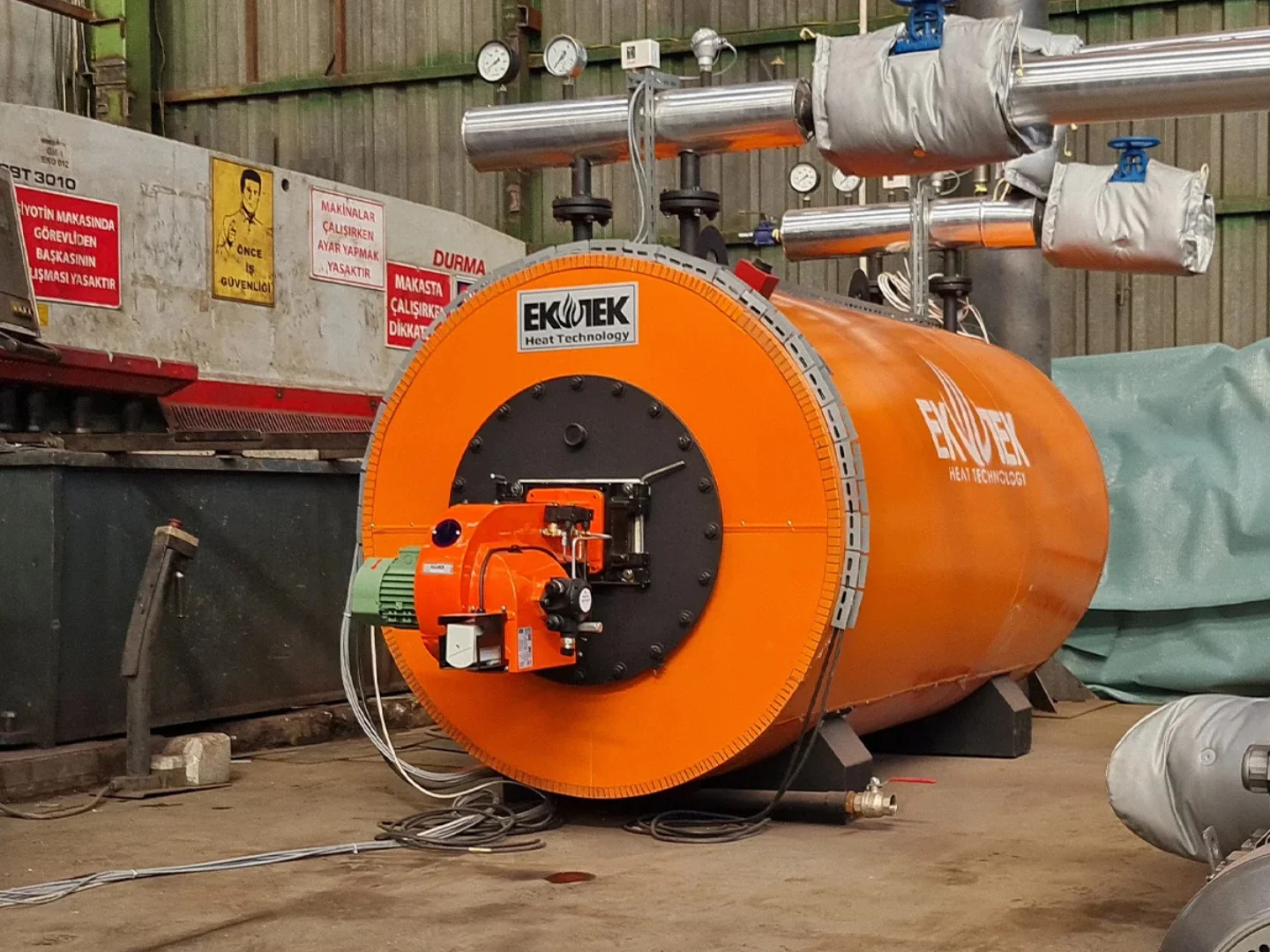
Thermal oil boilers are specialized industrial heating systems designed to provide safe, efficient, and stable high-temperature heat for production processes. Unlike steam boilers, thermal oil systems can reach incredibly high temperatures—up to 300°C—without operating under high pressure. This makes them highly efficient, cost-effective, and safe for a wide range of industrial applications. In modern production facilities, thermal oil boilers play a crucial role in improving process quality, reducing energy costs, and ensuring precise temperature control.
What Is a Thermal Oil Boiler Used For?
A thermal oil boiler heats heat-transfer oil to a specific temperature and circulates it through the production line. Because thermal oil can reach high temperatures at low pressure, it provides both safety and efficiency compared to high-pressure steam systems.
1. High-Temperature, Efficient Heating
Thermal oil boilers achieve high temperatures without requiring high operating pressure. This results in:
- safer system operation,
- lower maintenance costs,
- Reduced equipment risk and downtime.
2. Precise Temperature Control in Industrial Processes
Heat-transfer oil has excellent heat stability and slow temperature fluctuation, making it ideal for industries requiring consistent, uniform heat, including:
- chemical and petrochemical production,
- food processing (chocolate, oil, sugar),
- textile and fabric drying systems,
- MDF, plywood, and wood-processing lines,
- paper and packaging production.
3. Significant Energy Savings
Thermal oil boilers consume less fuel due to their efficient heat-transfer characteristics. When integrated with economizers, air preheaters, or modulating burners, energy savings can reach up to 15% or more.
4. Safe Operation at Low Pressure
The most significant advantage of thermal oil systems is their ability to reach high temperatures at low pressure. This provides:
- reduced explosion risk,
- lower licensing and inspection requirements,
- enhanced operational safety.
5. Wide Range of Industrial Applications
Thermal oil boilers are used across multiple industries that require stable, high-temperature heat. Common sectors include food, chemical, plastics, textile, coatings, paper, and wood processing industries.
What Are the Capacities of Thermal Oil Boilers?
Thermal oil boiler capacities vary depending on the total heat demand of the production process. Capacities are generally expressed in kcal/h or kW.
Most Common Thermal Oil Boiler Capacities
- 100,000 – 300,000 kcal/h: small-scale production lines, laboratory systems
- 300,000 – 800,000 kcal/h: textile, food, plastics industries
- 1,000,000 – 2,000,000 kcal/h: chemical plants, drying ovens, coating lines
- 3,000,000 – 5,000,000 kcal/h: MDF, plywood, high-demand industrial processes
- 6,000,000 – 8,000,000 kcal/h: petrochemical and heavy industrial applications
Key Factors When Choosing Capacity
To select the correct thermal oil boiler, the following operational requirements should be evaluated:
- required process temperature,
- total heat demand,
- available fuel type (natural gas, LPG, diesel, biomass),
- daily operating hours,
- energy cost goals and efficiency expectations,
- available installation area and infrastructure.
Thermal oil boilers provide safe, efficient, and cost-effective high-temperature heating for industrial processes. Their ability to operate at high temperatures while maintaining low pressure significantly reduces operational risk, improves energy efficiency, and ensures long service life. With a wide range of capacities, businesses can easily select a thermal oil boiler suitable for their production needs.