




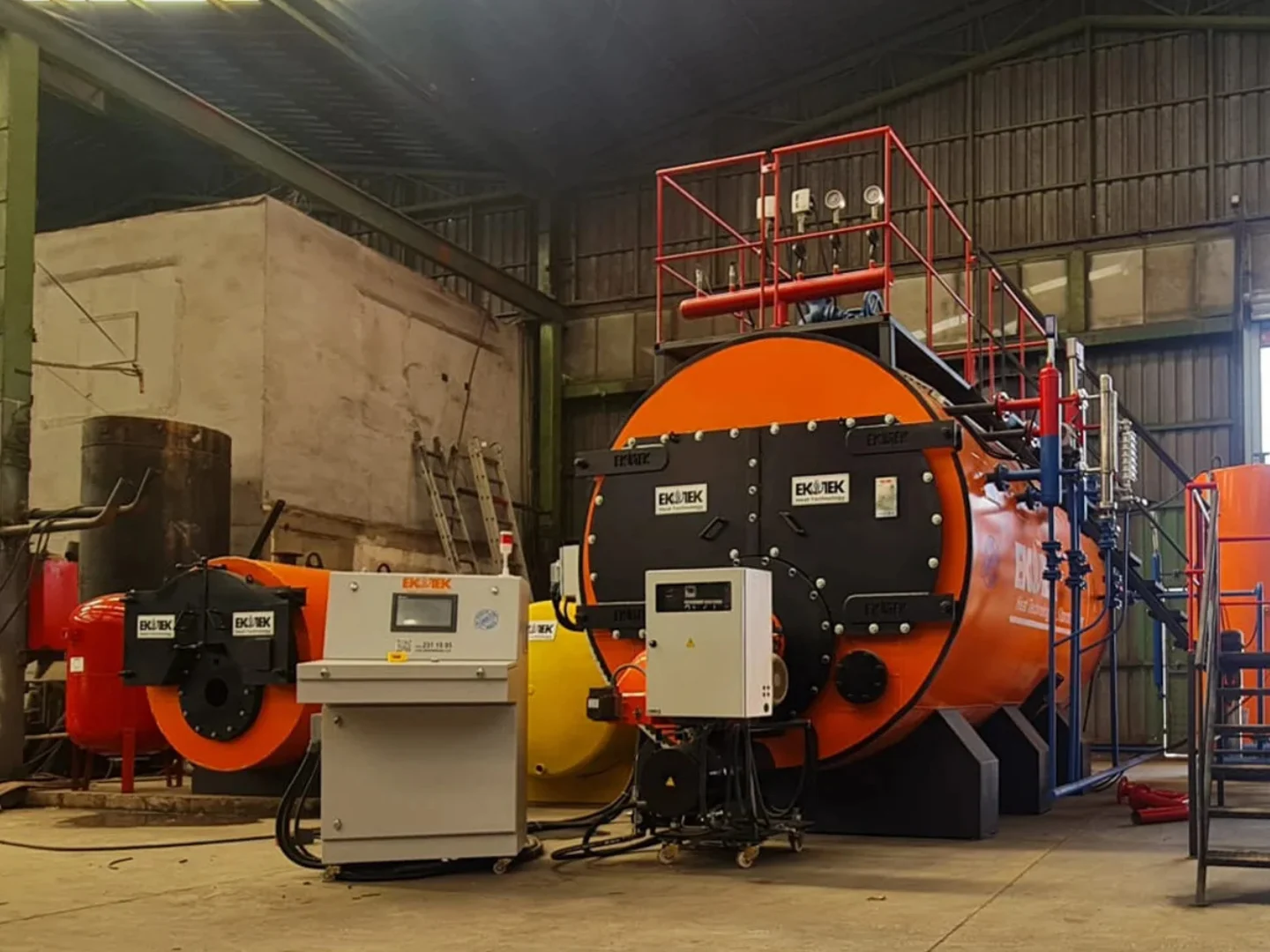
Steam boiler temperature is one of the most critical parameters that directly determine performance, efficiency, and process quality in industrial steam production. The temperature of the steam produced by a steam boiler is directly related to the operating pressure; because the boiling point of water increases with pressure. Therefore, the temperature of the steam boiler varies depending on the sector used, the type of process, operating pressure, and equipment specifications.
What Determines Steam Boiler Temperature?
A steam boiler’s temperature is primarily determined by its operating pressure. As pressure increases, the boiling point of water rises, resulting in higher steam temperatures. Industrial steam boilers generally operate between 8 and 16 bar, producing steam at 170-205°C. Applications that require higher thermal energy often use superheated steam systems, where temperatures can exceed 300°C.
Standard Steam Boiler Temperature Ranges
The relationship between pressure and temperature is predictable and consistent. Below is the typical temperature profile at everyday industrial steam pressures. These values are essential for selecting the correct boiler for process heating, sterilization, textile finishing, drying, power generation, and chemical reactions.
Why Steam Boiler Temperature Matters
Choosing the correct steam temperature is crucial because it directly affects:
- Energy efficiency – Higher temperatures deliver more usable heat per kilogram of steam.
- Process stability – Many industrial systems require precise temperature control to maintain product quality.
- Fuel consumption – Optimized temperatures reduce overhead and operational expenses.
- Steam dryness – Higher temperatures often improve steam quality, preventing moisture-related process issues.
- Equipment longevity – Correct temperature settings protect pipes, valves, and heat exchangers against thermal stress.
Superheated Steam Temperatures
Superheated steam systems heat saturated steam beyond its boiling point, resulting in temperatures typically between 300°C and 450°C. These systems are commonly used in:
- Power generation turbines
- Petrochemical processing
- High-temperature drying systems
- Advanced thermal energy transfer operations
Optimizing Steam Boiler Temperature for Efficiency
To maximize efficiency and ensure stable steam output, boiler temperature must be configured according to:
- Required process temperature
- Boiler capacity and thermal load profile
- Heat exchanger design
- Fuel type and burner modulation
- Steam distribution system size
Automation systems (PLC, PID control, O2 trim, economizers) also play a vital role in stabilizing temperature and minimizing fuel consumption.
| Pressure (bar) | Steam Temperature (°C) | Application Examples |
|---|---|---|
| 1 bar | ~100°C | Low-temp cleaning, humidification |
| 3 bar | ~134°C | Autoclave sterilization, food processing |
| 6 bar | ~159°C | Textile finishing, drying lines |
| 8 bar | ~170°C | General industrial steam systems |
| 10 bar | ~184°C | Chemical processing, heavy-duty heating |
| 16 bar | ~204°C | High-temperature process steam |
| Superheated steam | 300–450°C | Power plants, turbines, petrochemical |
Frequently Asked Questions
1. What is the typical temperature of a steam boiler?
Most industrial boilers operate between 170°C and 205°C, depending on the pressure (usually 8–16 bar).
2. Does higher pressure always mean higher steam temperature?
Yes. Pressure and temperature are directly correlated. As boiler pressure increases, water’s boiling point rises, producing hotter steam.
3. What temperature is steam at 10 bar?
At 10 bar, the steam temperature is approximately 184°C.
4. What is the temperature of saturated steam?
Saturated steam temperature equals the boiling point of water at a given pressure. For example, at 6 bar, the saturation temperature is about 159°C.
5. What is the temperature of superheated steam?
Superheated steam can reach 300°C–450°C depending on boiler design and fuel capacity.
6. Which industries require high steam temperatures?
Textile, chemical, pharmaceutical, drying systems, and power generation typically require higher temperatures.
7. How do I choose the right steam temperature for my process?
Determine the heat load, process temperature requirements, pressure limits, and boiler capacity. Using a boiler specialist or engineer ensures optimal selection.