




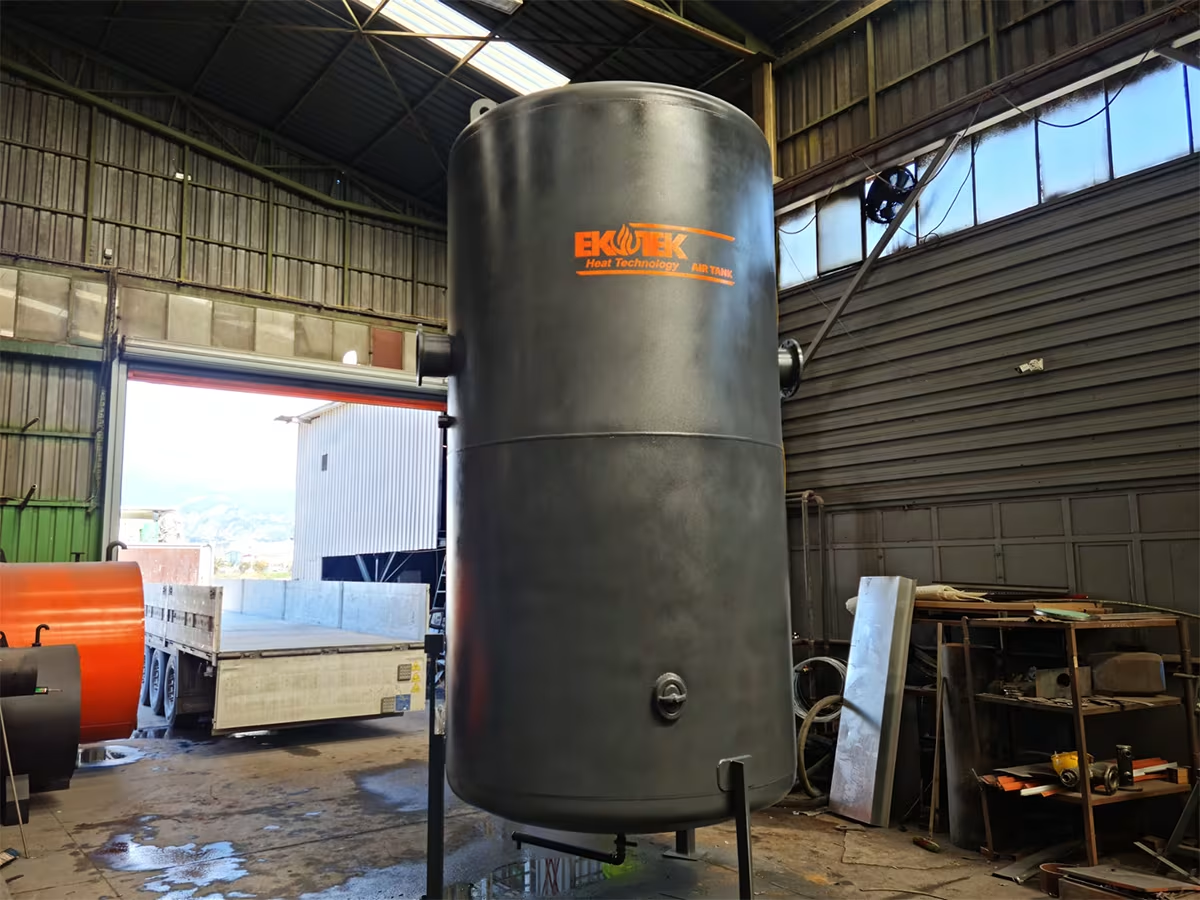
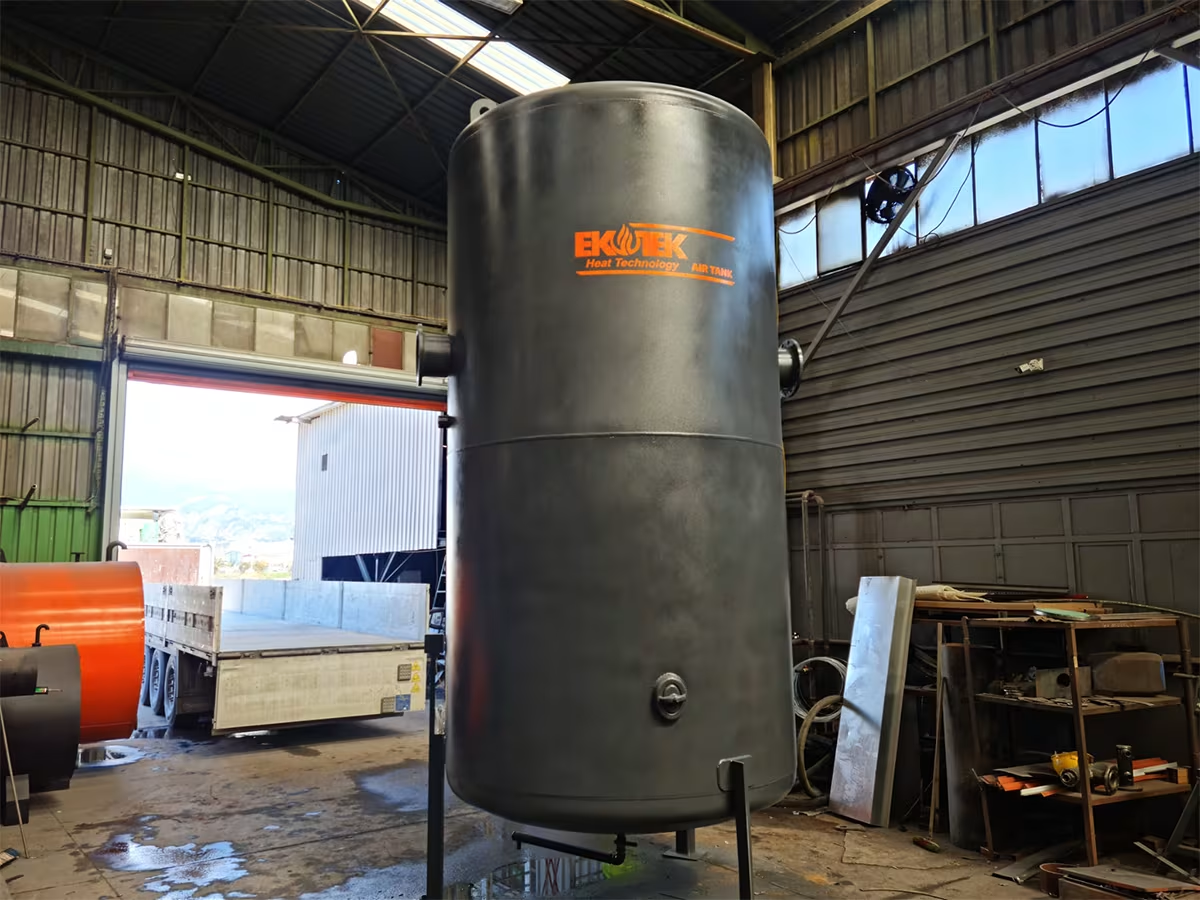
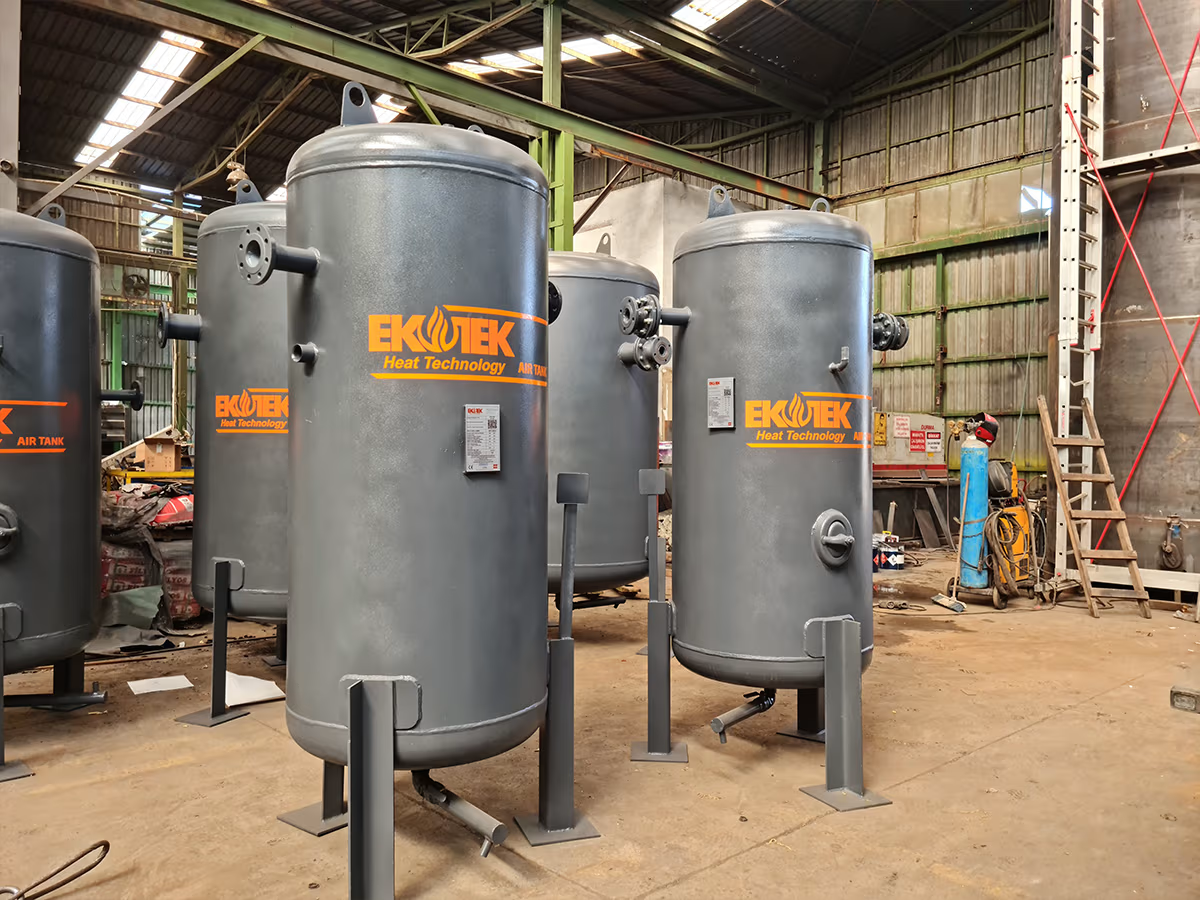
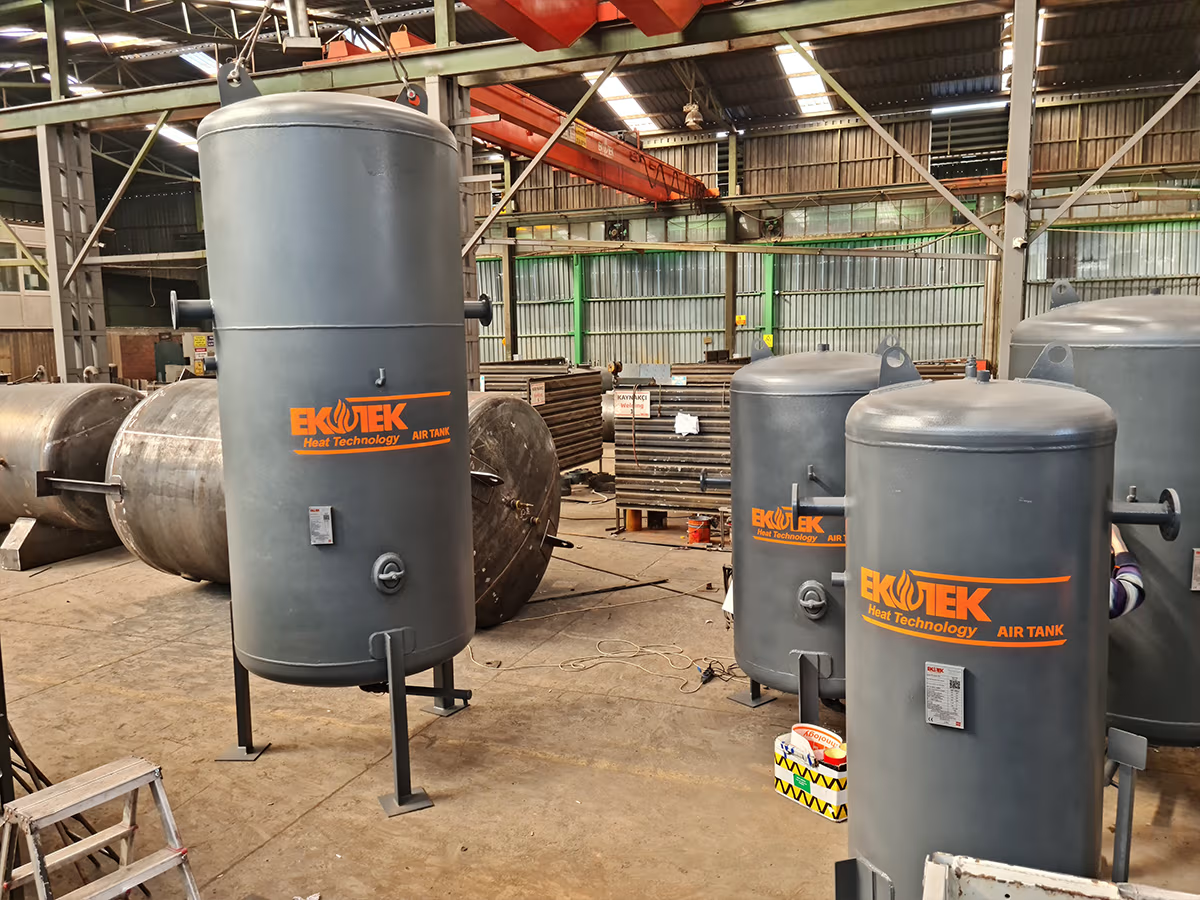
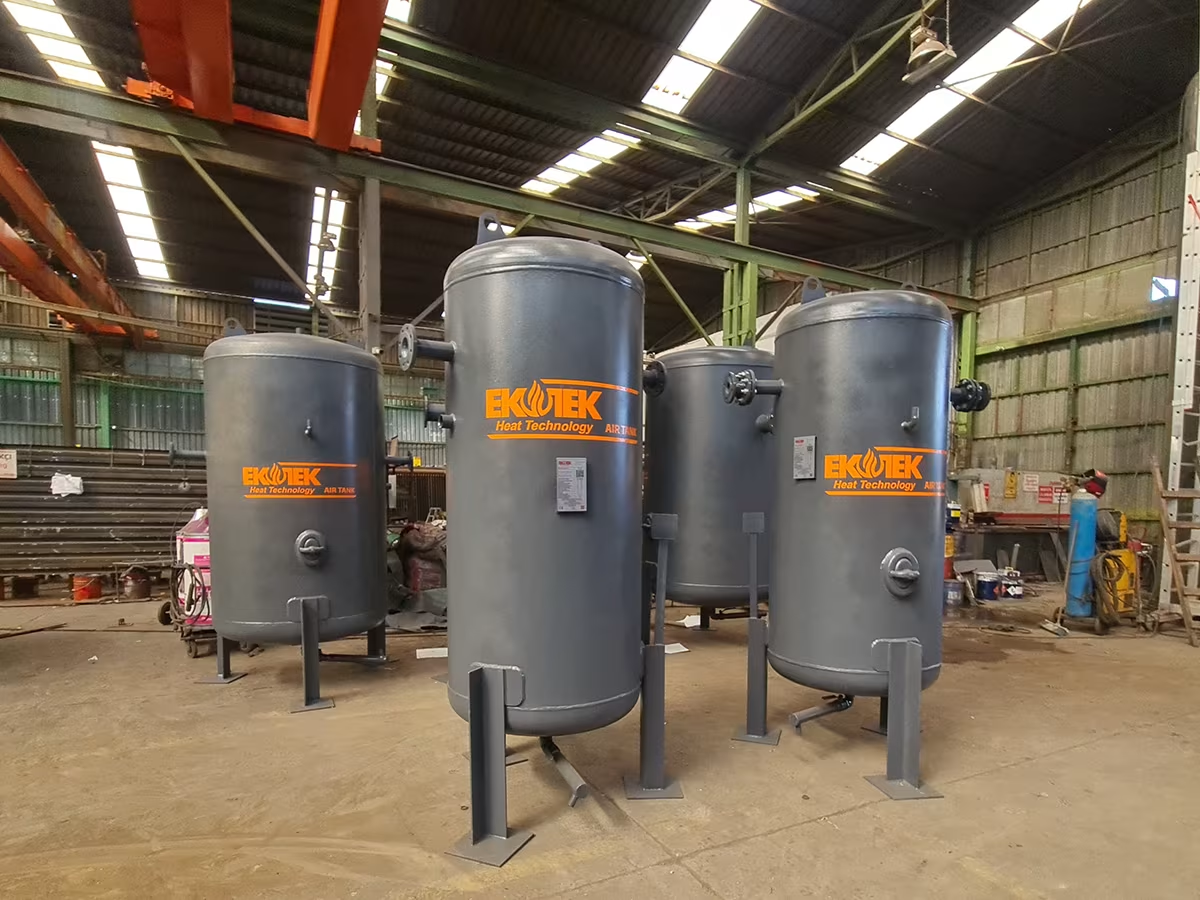
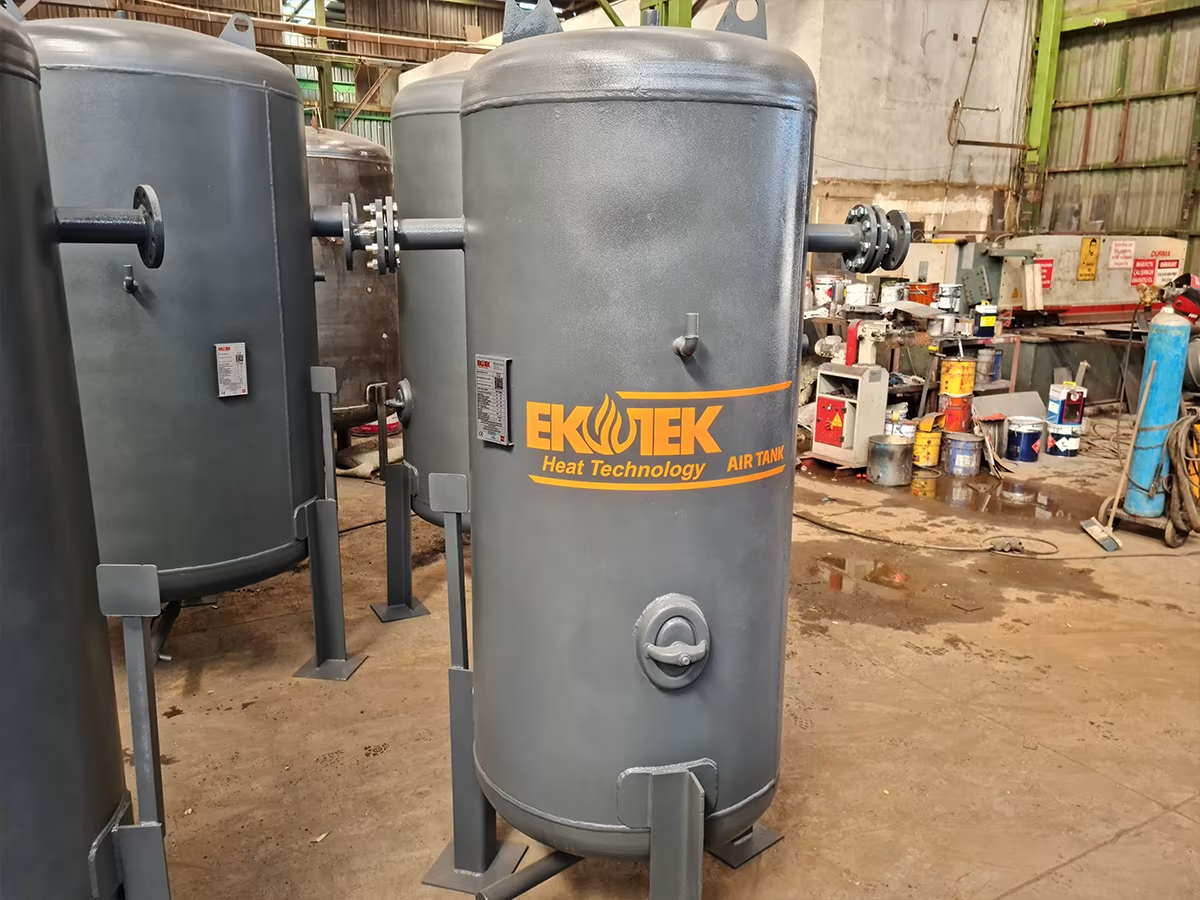
Air Tank
Ekotek Heat Technology manufactures air receiver tanks for industrial compressed air systems. An air tank stores air supplied by the compressor, helping the system respond to changes in demand and reduce pressure fluctuations.
Choose a receiver by evaluating compressor flow, air consumption, operating pressure and available space together. Request a technical quotation for volume, connections, materials, surface treatments and documentation.
Technical Specifications
-
Working Pressure8-60 Bar
-
Volume100 L - 100.000 L
-
Manufacturing StandardManufactured to EN 286-1 or optionally ASME certified
-
MaterialP235 Gh – P265 Gh – P355 Gh
-
Inner SurfaceOptional epoxy coating or galvanized surface
-
Outer SurfacePaint matching the RAL color code or an optional hot-dip galvanized coating
-
AccessoriesPressure gauge, Safety valve, Drain valve, Level indicator (optional)
-
Design TypeVertical
-
Optional FeaturesStainless steel production, Hot-dip galvanized production
-
Color OptionsOrange, anthracite, yellow, pink, blue, green, red, black, white
What Is an Air Receiver Tank?
An air receiver tank stores compressed air produced by a compressor. Also called a compressed air tank or compressor receiver, it provides storage capacity between the compressor and air users. When correctly sized, it can help manage short periods of increased demand and reduce pressure fluctuations.
Cooling inside the tank can produce condensate that must be removed through a suitable drain arrangement. An air receiver does not replace an air dryer or filter. Select air treatment equipment separately for the required air quality.
How to Size a Compressed Air Receiver
Tank volume should not be selected from compressor motor power alone. Consider compressor flow, average and peak air consumption, acceptable pressure variation and the compressor control method. A short burst of demand creates different requirements from a continuous high load.
- Provide compressor flow together with its pressure and reference conditions.
- State the minimum pressure required by the air users and the compressor operating range.
- Identify simultaneous consumers and the duration of peak demand.
- Specify available space, connection sizes and maintenance access.
Working Pressure and Design Conditions
Check the permitted pressure and temperature limits on the selected tank nameplate and technical documents. Compressor settings, safety devices and system connections must be compatible with those limits. Confirm volume and pressure options for each model.
Specify operating and design conditions separately in your enquiry. When replacing a receiver, compare connections, installation dimensions, operating limits and documentation requirements as well as nominal volume.
Materials, Coatings and Accessories
Shell material and surface treatments depend on service conditions, condensate, environmental exposure and application requirements. Confirm the suitability and supply scope of painted, galvanized, internally coated or stainless steel options for the proposed model.
Pressure gauges, safety valves and condensate drains should be selected as part of the tank and system design. Agree connection sizes, positions and included accessories in the quotation. Explore our industrial tanks for related storage solutions.
Applications of Industrial Air Tanks
Air receivers are used in industrial compressed air installations serving pneumatic equipment and production lines. The consumption profile, air quality requirements and service conditions influence selection. A tank alone does not establish the required air quality for food production or other specialist applications.
Installation, Condensate Drainage and Maintenance
Installation and commissioning should follow the product documents and system design and be performed by qualified personnel. Provide access to safety devices and drain connections and ensure supports and piping are suitable for the installation.
The maintenance plan should address condensate drainage, leaks, signs of corrosion and the condition of accessories. Establish maintenance and inspection arrangements using equipment documentation and applicable local requirements. Consult the relevant user manuals and request model-specific documents from our team.
Manufacturing Documents and Certification
Confirm the manufacturing standard, conformity documents and test records for the proposed tank and delivery scope. A general list of documents should not be assumed to cover every volume and pressure option. Review our certificates and state project documentation requirements in your enquiry.
Air Receiver Tank Price and Quotation
The price depends on volume, design pressure and temperature, material, coating, connections, accessories and documentation scope. Check whether transport, installation and commissioning are included when comparing proposals.
For a quotation, provide required volume or compressor flow, working pressure, air demand profile, available installation space and requested accessories. For a replacement, the existing receiver nameplate details and connection dimensions help identify a suitable option.
Frequently Asked Questions About Air Receiver Tanks
Is an air receiver tank the same as a compressor tank?
These terms commonly refer to a pressure vessel that stores air supplied by a compressor. Define the product by volume, operating conditions, connections and documentation scope.
What size air receiver does my compressor need?
There is no single volume suitable for every system. Compressor flow, air consumption, peak demand duration, pressure range and compressor control method should be considered together.
How should the pressure rating be selected?
Consider the compressor operating range, the pressure required by air users and permitted tank operating limits. Check exact limits on the product nameplate and technical documents.
Does an air tank remove all moisture from compressed air?
No. It can allow condensate formed during cooling to be drained, but it does not replace an air dryer or filter. Select drying and filtration equipment separately for the required air quality.
How do I choose a galvanized or stainless steel air receiver?
The choice depends on the environment, condensate, surface requirements and application. Confirm material and coating suitability and availability for the proposed model.
What information is needed for an air tank quotation?
Provide volume or compressor flow, working pressure, air consumption profile, available space, connection sizes, material and coating preferences, and accessory and documentation requirements.
Frequently Asked Questions (FAQ) about Air Tank
Is an air receiver tank the same as a compressor tank?
These terms commonly refer to a pressure vessel that stores air supplied by a compressor. Define the product by volume, operating conditions, connections and documentation scope.
What size air receiver does my compressor need?
There is no single volume suitable for every system. Compressor flow, air consumption, peak demand duration, pressure range and compressor control method should be considered together.
How should the pressure rating be selected?
Consider the compressor operating range, the pressure required by air users and permitted tank operating limits. Check exact limits on the product nameplate and technical documents.
Does an air tank remove all moisture from compressed air?
No. It can allow condensate formed during cooling to be drained, but it does not replace an air dryer or filter. Select drying and filtration equipment separately for the required air quality.
How do I choose a galvanized or stainless steel air receiver?
The choice depends on the environment, condensate, surface requirements and application. Confirm material and coating suitability and availability for the proposed model.
What information is needed for an air tank quotation?
Provide volume or compressor flow, working pressure, air consumption profile, available space, connection sizes, material and coating preferences, and accessory and documentation requirements.
Air Tank Get a Quote
Contact us for more details about the product, solutions and services.
- Share your full name, company, and contact details to receive a fast response for this product.
- The product and page context are added to the message so your request reaches the right sales team.
- You can contact our team directly for technical details, product selection, quotation, and application scope.
Requests submitted from this product page Air Tank are delivered together with the page title.