




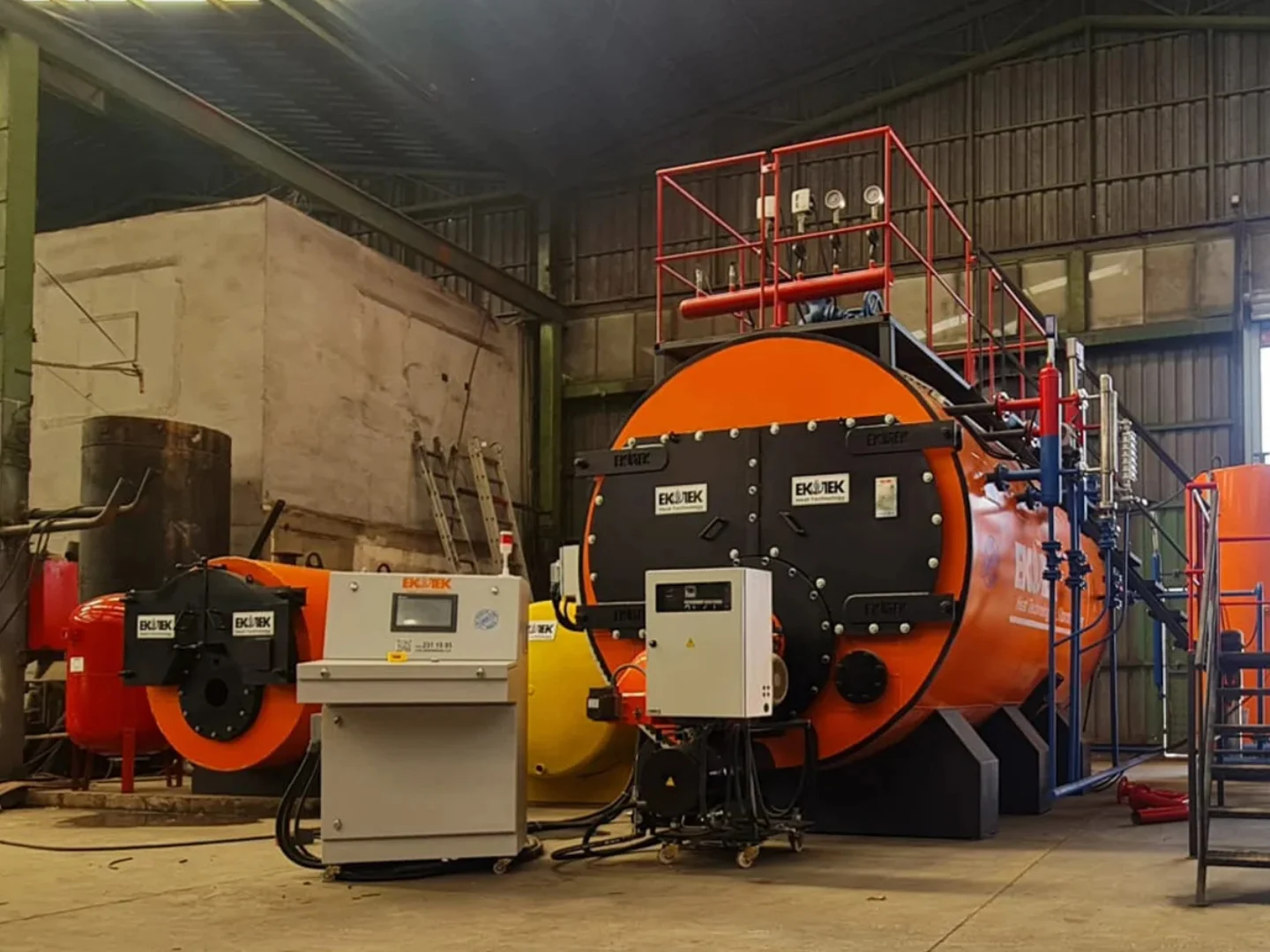
Steam boilers are among the most essential equipment in industrial facilities, providing heat, process steam, and energy conversion for countless applications. By converting water into pressurized steam, these systems enable continuous production in industries such as textiles, food, chemicals, hospitals, energy, and more. When selected and operated correctly, a steam boiler reduces operating costs, increases efficiency, and ensures maximum operational safety.
What Is a Steam Boiler Used For?
A steam boiler is a heat generation system that converts water into steam at a specific pressure and temperature. The produced steam is used directly or indirectly in various production processes.
1. Generates Heat Energy
Most industries require heat to operate. Steam boilers efficiently supply this thermal energy. Steam is widely used in:
- heating processes,
- machinery and equipment operation,
- heating coils and heat exchangers,
- thermal treatment applications
2. Supplies Process Steam
Industries like textiles, food processing, and chemicals rely heavily on process steam. Steam boilers provide stable temperature and pressure, ensuring consistent product quality.
3. Used for Sterilization and Hygiene
Hospitals, hotels, laundries, and food plants use steam for:
- equipment sterilization,
- laundry operations,
- cleaning and sanitation tasks
4. Plays a Key Role in Power Generation
In turbine-and-generator systems, steam is used to generate electricity. As a high-pressure energy carrier, steam is the backbone of many power plants.
5. Used in Industrial Drying Applications
Steam provides controlled heat for drying systems used in paper mills, textile dryers, wood kilns, and agricultural product dryers.
Steam Boiler Capacities
Steam boilers are manufactured in a wide range of capacities depending on the needs of the facility. Capacity refers to the amount of steam produced per hour and is expressed in “kg/h.”
Most Common Steam Boiler Capacities
- 175 kg/h – 500 kg/h: Small businesses, workshops, laboratories
- 1,000 kg/h: Medium-sized production lines
- 2,000 kg/h – 4,000 kg/h: Textile, food, chemical industries
- 5,000 kg/h – 10,000 kg/h: Large-scale industrial plants
- 15,000 kg/h – 20,000 kg/h: Multi-line manufacturing facilities
- 30,000 kg/h – 40,000 kg/h: Major industrial operations and power plants
Capacity Examples by Industry
- Food processing facilities: 1,000 – 6,000 kg/h
- Textile factories: 2,000 – 10,000 kg/h
- Chemical plants: 5,000 – 20,000 kg/h
- Energy plants: 20,000 – 40,000 kg/h
Custom Engineering Options
Steam boilers can be specially engineered based on project requirements:
- Scotch-type steam boilers
- Fire-tube and smoke-tube boilers
- High-pressure steam boilers
- 3-pass / 4-pass / 5-pass designs
- Natural gas, LPG, fuel oil, biomass compatible models
What to Consider When Choosing a Steam Boiler
- Required steam capacity and pressure level
- Boiler efficiency (90%+ preferred)
- Fuel type (natural gas, LPG, fuel oil, biomass)
- Heat transfer surface area and pass design
- Automation and safety equipment
- Quality certifications such as CE, ISO, TSE
- High-efficiency burner system
Steam boilers are the heart of industrial production and are critical across almost every industry. With capacities ranging from 175 kg/h to 40,000 kg/h, steam boilers can be tailored to meet the specific needs of any facility. When selected and operated correctly, they offer high efficiency, reduced energy consumption, and safe, reliable performance.